Friday, July 9, 2010

Summertime

It's Summertime and the news reflects it (read the 1st § LOL):
Wed Jul 07, 2010 @ 10:13AM PST

Snoop-dogg <http://reporter.blogs.com/.a/6a00d83451d69069e20133f21ee7e8970b-pi>
*By Eriq Gardner*

EXCLUSIVE: It's been more than 30 years since the birth of hip-hop,
and in that time, one axiom holds true: If the ride is more fly, then
you must buy.

We're quoting Snoop Dogg, who allegedly didn't buy.

So says Michael Henderson, one of the most influential jazz musicians
of the past 40 years. Henderson played bass guitar and sang and, along
with bandmate Miles Davis, he put a funky groove in a genre of music
called fusion jazz.

Now, according to a lawsuit filed yesterday in Michigan, Snoop Dogg
took a sample from Henderson's "Do It All" album and incorporated it
into his own works without permission. Snoop Dogg isn't alone. In a
separate lawsuit, Henderson also targets rappers Nick Carter (aka
"Murs") and Patrick Douthit (aka "9th Wonder") for doing the same.

These rappers are now embroiled in a debate as old as hip-hop: Is
sampling legal?

For the most part it is. In the late 1980s and early '90s, though,
some courts started frowning on excessive sampling. In cases such as
/Grand Upright v. Warner
<http://cip.law.ucla.edu/cases/case_grandwarner.html>/, judges began
to see flagrant uses of sampling as copyright infringement.

Some legal experts argue that sampling might be a "fair use"
<http://www.artistshousemusic.org/videos/sampling+and+copyright>
depending on how much is used and for what purpose. They believe that
courts should recognize a "de minimis" standard for insignificant use
of a copyrighted work.

However, some judges haven't abided by that standard. Of particular
note, a three-judge panel at the 6th Circuit Court of Appeals reversed
a lower court decision in 2005 in /Bridgeport v. Dimension Films
<http://fsnews.findlaw.com/cases/6th/04a0297p.html>,/ saying that
musicians should pay for samples --- even unrecognizable snippets.

It's probably not a coincidence now Henderson is now targeting a pair
of prominent musicians in that same jurisdiction. He claims the
defendants had actual knowledge that they didn't have permission but
decided to take full credit for the work.

Henderson is targeting the Snoop track "Flashbacks," as well as a song
Snoop created with the group Warzone entitled "Hands on the Wheel,"
which is posted below. He's also claiming an infringing use in "3:16
pt. 2" by Murs and 9th Wonder.

Henderson is claiming statutory damages for the alleged infringement
as well as any profits made from the songs. He's asking the court to
enjoin the defendants from manufacturing, distributing and selling the
works further. Here's the complaint
<http://reporter.blogs.com/files/mied-09704306479.pdf>.

Friday, July 2, 2010

Holidays Upload : John Coltrane - Newport 02.07.1966

Sorry for the infrequent posting the last weeks, way too much to handle but to make it up to you here's a special holiday upload :


It has been around on a Coltrane Tree and was issued by Free Factory.
Details are as follows : (scan of cover art and booklet is included)

John Coltrane (ss, ts, per)
Pharoah Sanders (ts, picc, per)
Alice Coltrane (p)
Jimmy Garrison (b)
Rashied Ali (d)
"Newport Jazz Festival", Newport, RI
July 2, 1966

01. My Favorite Things (incomplete)  
02. Peace On Earth  
03. Leo

Wednesday, June 23, 2010

Elmore Leonard updates


Some not so very recent, but still interesting news on Elmore Leonard :

Fits his novel 'The Switch' might be adapted for film says the Guardian,
and then the 'missing link' in the Carl Webster saga will be filled this autumn when 'Comfort to the Enemy' will be published as a trade papaberback, after its initial publication as a series in the NYT.

Wednesday, June 16, 2010

Bill Dixon R.I.P.

Just got this email in :

"I've just been asked by his estate to deliver the sad news that
trumpeter/composer/educator Bill Dixon died last night in his sleep at
his longtime home in North Bennington, Vermont after a two-year
illness.

He was 84 years old.

Dixon is survived by his longtime partner Sharon Vogel and two children.

Information about a memorial service and where to send donations in
his name is forthcoming.

An official obituary is in the works and will be available shortly."

Monday, June 14, 2010

Not only Kind of Blue

Maybe Kind of Blue isn't the only recording we listened at at a wrong speed. Robert Johnsons 'King of The Delta Blues might be in the same league.
Read more here.

Tuesday, June 1, 2010

James Ellroy meets Joseph Wambaugh


Here's a report of (more or less) recent meeting and discussion between James Ellroy and Joseph Wambaugh. Enjoy the read!

Monday, May 31, 2010

ROIO of the week : Bud Powell - Relaxin' At Home, 61-64

Here's the (for the time bein') last one in our little series of rare Bud Powell recordings. Cover art included. Enjoy!


Earl Bud Powell, Vol. 4 - Relaxin' At Home, 61-64  (Mythic Sound MS 6004-2)

Bud Powell (p, vo) Francis Paudras (brush -2)
Francis Paudras' home, Rue De Boursault, Paris, France, 1961
1.Christmas Song
2.Groovin' High
3.Yeheadeadeadee
4.La Marseillaise

Bud Powell (p) Francis Paudras (brush)
Paris, France, 1962
1. In The Stage Door Canteen
2. Monopoly

Bud Powell (p, vo -1, p -2,3) Francis Paudras (brush -2,3)
Francis Paudras' home, Rue De Clichy, Paris, France, 1963
1.Darn That Dream
2.Crossin' The Channel
3.Lady Bird

Bud Powell (p, vo -1/4, p -5/9) Michel Gaudry (b -7/9) Francis Paudras (brush -1/4,7/9)
Francis Paudras' home, Rue De Clichy, Paris, France, early 1964
1.Conception
2.Relaxin' At Camarillo
3.Celia
4.Gone With The Wind
5.I Know That You Know
6.How High The Moon / Ornithology
7.Una Noche Con Francis
8.In Th Mood For A Classic
9.I Wanna Blow Now
** also issued on Mythic Sound MS 6004-2.

Bud Powell (p, vo) Francis Paudras (brush)
Francis Paudras' home, Rue De Clichy, Paris, France, early 1964
1.Lady Bird (alt. take 1)
2.Lady Bird (alt. take 2)
3. Be-Bop
** reissue of Mythic Sound MS 6004-1 + 3 bonus tracks.

Saturday, May 29, 2010

Tuesday, May 18, 2010

James Ellroy : The Hilliker Curse Update

Apparently the new James Ellroy book will be published on September 7th. Mr. Ellroy will be touring in the fall and apparently will pas by in NY, SF, LA, London, Finland, Italy and possibly France.

Monday, May 17, 2010

Hank Jones RIP

Bad news again and it hits hard. Hank Jones left us at the age of 92. I had the opportunity to see him a few times the last years each with Joe Lovano in 4tet or duo. Here's the NYT obit and a shorter one from Jazztimes.

Friday, May 14, 2010

ROIO of the week : Bud Powell - Birdland 30.09.1964

We continue our Bud Powell saga, here with a recording from Birdland in 1964. It's taken from a bootleg on Mythic Sound, scans of the cover art are included.

Here are the details, enjoy!


Bud Powell (p) John Ore (b) J.C. Moses (d)
"Birdland", NYC, September 30, 1964

The Best Thing For YouMythic Sound MS 6009-1

'Round About Midnight-

I Want To Be Happy-

Polka Dots And Moonbeams-

Wee-

Body And Soul-

That Old Black Magic-

Hallucinations (Budo)-

It Could Happen To You-

Lullaby Of Birdland-

ButtercupMythic Sound MS 6009-2


Wednesday, May 12, 2010

Wayne Shorter receives Honorary Doctorate at NYU

 
May 12, 2010


New York University President John Sexton today bestowed an honorary doctorate on award-winning jazz saxophonist, composer, and NYU alumnus Wayne Shorter at NYU's 178th Commencement Exercises in Yankee Stadium.  Over 25,000 graduates, faculty, staff, and guests attended the morning ceremony.

The following citation was read in conferring the Doctor of Fine Arts degree, honoris causa, on Wayne Shorter:

"Wayne Shorter—pivotal figure in the history of jazz, unique composer and astonishing improviser, your work of five decades has helped shape a fundamental transformation of modern music. Your early teenage brilliance on the tenor saxophone earned you a nickname, ‘The Newark Flash.’ One of Art Blakey’s renowned Jazz Messengers, you won the DownBeat magazine ‘New Star Saxophonist’ award in 1962, and two years later joined Miles Davis and his quintet—following his excursions into electric jazz. With your colleagues from Weather Report and later your own groups as a leader, you in large measure helped define the genre of jazz fusion and modern jazz. Your compositions are considered standard repertoire by jazz musicians from around the world. Informed by your far-reaching intelligence and deep interest in philosophy, literature, and film, your music knocks down walls between classical and jazz and embraces peers, critics, and fans alike in a consensus of awe. You have earned 9 Grammy Awards and 13 Grammy nominations, and you are a designated ‘Jazz Master’ of the National Endowment of the Arts. We proudly salute you, a 1956 Bachelor of Music Education graduate in our Steinhardt School, as the singular musician roundly considered to be the greatest living composer of jazz.


"Wayne Shorter—esteemed alumnus, an American original, your masterful music interweaves the popular and progressive as you soar into flights of genius that make your life’s work a unique echo of the eternal. By virtue of the authority vested in me by New York University, I am pleased to confer upon you the degree of Doctor of Fine Arts, honoris causa.

Tuesday, May 11, 2010

The Pacific

http://search.japantimes.co.jp/cgi-bin/eo20100507a1.html

May 7, 2010

War epics on screen skip mass slaughter of civilians
by Charles Burress, Special to The Japan Times

SAN FRANCISCO ­ Does the history diet fed to Americans by Hollywood promote an unhealthy national memory? The latest screen epic about American heroism in World War II ­ the HBO miniseries "The Pacific" ­ is clouded by an unintended irony.

Creators Steven Spielberg and Tom Hanks, who teamed up also on "Band of Brothers" and "Saving Private Ryan," have sought to strengthen the authenticity of Hollywood renderings of World War II. But while such portrayals may give us a keener appreciation of the courage and suffering of U.S. troops on the battlefield, they also add further weight to a lopsided World War II history that leaves the dishonorable part of America's wartime behavior buried deeper in national amnesia.

In what may be added irony, the widely reported premier of "The Pacific" came but four days after the little noticed anniversary of one of the darkest events in American war history ­ the March 10, 1945, firebombing of Tokyo. The two-volume World War II history "Total War," by Peter Calvocoressi, Guy Wint and John Pritchard, describes the massive napalm attack on Japan's capital as not only "the greatest air offensive in history" but also "deliberate, indiscriminate mass murder."

The raid by B-29 bombers probably ranks as history's largest mass killing of civilians in a short time span. The estimated death toll of 100,000 exceeded the immediate deaths in the atomic bombing of Hiroshima or Nagasaki, or the Dresden firebombing.

"The street was filled with blackened corpses," air raid survivor Haruko Nihei recently told a U.C. Berkeley audience on her first trip to tell her story in America. "There were so many of them that it was hard to walk on the streets."

Then an 8-year-old girl, Nihei survived after falling in the panicked tumult and being covered by other people. When she came to, she found the bodies on top of her were "black as charcoal."

The U.S. Strategic Bombing Survey said at the time that "probably more persons lost their lives by fire in Tokyo in a six-hour period than at any time in the history of man." The inferno was so intense that fleeing victims burst spontaneously into flame and were boiled alive in canals into which they had plunged to escape. Their agonies were no less severe than those suffered at Hiroshima.

Confronting U.S. mass killing of civilians in WWII ­ particularly the Tokyo firebombing ­ is important now, not just because Americans should remember both the good and bad about their history. The U.S. has trouble winning hearts and minds in today's war against terrorists in part because the terrorism blood on America's own hands leaves it vulnerable to effective enemy propaganda and charges of hypocrisy.

In the aftermath of 9/11, Osama bin Laden cited Hiroshima, as if to say the World Trade Center deaths represented only a small taste of the type of warfare that the U.S. had long ago sanctioned.

America was far from the first to bomb cities. The tactic began as early as the 19th century with bombs dropped from balloons over Venice. Indiscriminate killing of noncombatants from the air began, according to many historians, in the 1930s. The Japanese bombing of civilians in the Chapei section of Shanghai in January 1932 "horrified much of the world and anticipated the mass bombings of populations a decade later," wrote Cornell University historian Walter LaFeber. The most infamous early example, immortalized in a painting by Picasso, came five years later in 1937 when more than a thousand people died in the German bombing of Guernica.

The Japanese military embraced the tactic during the Second Sino-Japanese War, bombing several Chinese cities. The most destruction came from repeated air raids on Chongqing, China's wartime capital after the 1937 fall of Nanjing. Aerial attacks on Chongqing in May 1939 alone claimed an estimated 5,400 lives, according to Mark Selden, a Japan specialist at Cornell.

In WWII in Europe, bombing tolls mounted, beginning with German air raids on Warsaw in 1939 and Rotterdam in 1940. German bombing of British cities in the eight months following September 1940 claimed about 30,000 lives. British bombing of German cities began in 1942 and was later joined by the Americans. About 45,000 were killed in raids on Hamburg alone in July and August of 1943. Nearly as many were killed at Dresden in February 1945.

The concentration of carnage saw a significant escalation when America sent waves of bombers over Japan, especially in 1945. In attacks on 66 Japanese cities, including Hiroshima and Nagasaki, the number of civilians killed by American bombs was "probably close to four hundred thousand," estimated MIT historian John Dower.

In the 2003 documentary "Fog of War" Robert McNamara, who served in World War II under the architect of the bombing campaign, Maj. Gen. Curtis LeMay, quoted LeMay's postwar assessment: "If we'd lost the war, we'd all have been prosecuted as war criminals."

McNamara, who later became U.S. Secretary of Defense, added, "I think he's right. He, and I'd say I, were behaving as war criminals."

But if the U.S. was guilty of war crimes, then weren't Japan, Germany and Great Britain also guilty? All of them rained bombs indiscriminately on civilians. America may have done so with the largest kill ratio, but virtually all laws against killing of innocents are not conditional on the number killed.

International law on bombing cities at that time was not clearly established. A Hague Convention that was drafted in 1923 explicitly banned aerial bombardment of civilians but was never ratified. The League of Nations unanimously passed a resolution in 1938 outlawing aerial bombing of civilian populations, but Japan and Germany by then had withdrawn from the league and the U.S. had never joined.

The most relevant agreement was the earlier Hague Convention Respecting Laws and Customs of War on Land of 1907, which had been ratified by the major combatants of WWII. It forbade bombardment of "undefended" towns, bombardment without prior warning and destruction of enemy property not demanded by military necessity. But those who ordered the later bombings in Asia and Europe, though they were accused by their adversaries of violating international law, typically said they had met the required conditions.

At the Tokyo war crimes trial, bombing of cities was not one of the charges brought against the Japanese defendants. Nor was it charged against German leaders at Nuremberg. "Aerial bombardment had been used so extensively and ruthlessly on the Allied as well as Axis side that neither at Nuremberg nor Tokyo was the issue made a part of the trials," recalled Telford Taylor, chief prosecutor at Nuremberg.

So, should anyone be blamed? One Japanese scholar said the 20th century's ghastly record of civilian slaughter from the air had its origin in Japan's attacks on Chinese cities.

In the book "Bombing Civilians," Tetsuo Maeda, who retired in 2007 as a professor of international studies at Tokyo International University, wrote, "The sudden horror from the skies that took place in wars of the 20th century had its roots in tactics used by the Japanese forces during the Asia Pacific War. This horror boomeranged back to Japan in extreme form with the disasters of Hiroshima and Nagasaki."

The argument that "Japan started it" is often expressed, especially by American patriots, in the many debates over "victors' justice" at the Tokyo war crimes trial and American misdeeds in the Pacific war. Can earlier Japanese bombing in China ­ along with German and British bombing in Europe and the uncertainty of international law at the time ­ exculpate the later American bombing of Japanese cities?

International laws of war, though not precisely defined, are generally viewed as including more than just signed treaties and agreements. Many scholars and jurists, including the judges at Nuremberg, have held that nations are bound also by "customary laws of war," regardless of what particular treaty was signed by what country.

The indiscriminate slaughter of noncombatants violates customary laws of war as well as universal moral values. It sickens the human soul. Saying "Somebody else did it too" is no excuse.

All nations that bomb civilians are guilty and should account for their actions, and I believe the U.S. owes a special accounting. The scale and intensity of American bombing crossed a new threshold and, in the view of some critics, turned the bombing of cities into America's chief weapon in concluding its war against Japan.

"If others, notably Germany, England and Japan led the way in area bombing, the targeting for destruction of entire cities with conventional weapons emerged in 1944-45 as the centerpiece of U.S. warfare," Selden wrote.

It was the Tokyo attack that "initiated the U.S. government's embrace of urban terror bombing as a legitimate form of warfare," wrote Cary Karacas, an assistant professor at the College of Long Island who studies bombing of civilian populations.

In 1945, U.S. Brig. Gen. Bonner Fellers described the U.S. air raids over Japanese cities as "one of the most ruthless and barbaric killings of noncombatants in all history."

The U.S. ­ and especially Hollywood's shapers of national memory ­ have a special responsibility also to make amends for past omissions and tell the full truth about the past. A more forthright confrontation by Americans with their own war crimes would not only provide a model for other nations with dark pasts but also undermine the ability of America's present enemies to win recruits for committing similar crimes against the U.S. and its allies.

Charles Burress is a San Francisco Bay Area freelance journalist who researched war memory as a Fulbright Scholar at the University of Tokyo and Keio University.

Monday, May 10, 2010

Another book on Kind Of Blue

Richard Williams' new book, The Blue Moment: Miles Davis's Kind of Blue and the Remaking of Modern Music' is bein' discussed at NPR and one can read and download the review here.

Thursday, May 6, 2010

Omega Minor - Paul Verhaeghen


Omega Minor, which was written by the flemish author Paul Verhaeghen and originally published in english
is now finally translated in french. I read it last year in the dutch version and it's one of those few books that still follows you all the way.

Vous pouvez lire quelques critiques publié  par Pierre Assouline sur son blog et également la critique par Le Soir ici.

Don't forget to check out the blog by the author himself which can be visited here.

Wednesday, May 5, 2010

Artie Shaw biography

The NYT had a review last weekend of a new Artie Shaw bio. Tought it might be of interest to some of you. Enjoy

Tuesday, May 4, 2010

Band Of Brothers author accused of fabrication for Eisenhower biography

US academic world shocked as respected historian is said to have 'made up'
meetings with 34th US president

Paul Harris
The Observer, Sunday 25 April 2010

His book Band of Brothers – which chronicled the exploits of one company of
US airborne troops in second world war Europe – was turned into a highly
praised TV series.

But now American historian Professor Stephen Ambrose, who was President
Dwight D Eisenhower's official biographer and wrote or edited more than a
dozen books about him, is embroiled in a posthumous controversy. It is
alleged that he invented many meetings he claimed to have had with
Eisenhower, and even fabricated entire interviews with him. The revelations
have sent shock waves through the scholarly community in the United States.

The books written by Ambrose, who died in 2002, brought him popular acclaim,
and director Steven Spielberg used him as a military adviser on his 1998
Oscar-winning film Saving Private Ryan. Band of Brothers became a cultural
milestone when it was turned into a TV series on which Ambrose was a
producer. It was hailed for educating an entire generation about the
sacrifices of their forefathers. But it appears that Ambrose indulged in
some sort of fantasy about the extent of his relationship with Eisenhower.
In TV interviews, he claimed to have spent "hundreds and hundreds of hours"
with the former president. He even once said he would spend two days a week
working with Eisenhower in his office.

However, recently studied records of Eisenhower's meetings contradict the
notion that the pair had any lengthy face-to-face contact. "I think five
hours [in total] is a generous estimation of the actual time they spent
together. I personally would push it back to less than two or three," said
Tim Rives, deputy director of the Eisenhower Presidential Library in
Abilene, Kansas.

The discovery came to light almost by accident. The museum had been planning
an exhibition exploring the relationship between Ambrose and Eisenhower.
Rives found that the records showed that Ambrose and Eisenhower had met only
three times, and never alone. He found that on seven occasions when Ambrose
had claimed in the footnotes to his book Supreme Commander to have met
Eisenhower, his subject was either elsewhere in the country or holding
meetings with other people at the time. In one example, Ambrose claimed to
have had an interview with Eisenhower in Pennsylvania, when Eisenhower was
in Kansas. "The whole story kind of unravelled from there. It was quite a
surprise. We were not looking for it, so it sort of happened almost by
accident," Rives said.

Given that the lives of former presidents are meticulously detailed by their
staff, there is almost no chance Ambrose could have held interviews with
Eisenhower that went unrecorded.

Later claims by Ambrose in other books to have interviewed Eisenhower lack
specific dates or places, but were just footnoted as "Interview with DDE".
However, the range of subjects Ambrose claimed to have discussed with
Eisenhower increased to take in topics such as giving up smoking or the
Vietnam war.

Rives believes there is no way that Ambrose could have discussed such a vast
array of subjects in the tiny amount of time he actually spent with his
subject. "I find that very doubtful. That should be something that would be
a concern for scholars. It could cast doubt."

Ambrose claimed that Eisenhower asked him to be his biographer by ringing
him out of the blue in 1964. But Rives found letters from Ambrose to
Eisenhower introducing himself and then asking him to agree to Ambrose
writing his biography. This is not the first scandal over Ambrose's work. In
2002 he was accused of plagiarism in his book The Wild Blue. His publisher
issued an apology but Ambrose said he had merely failed to put some short
passages taken from elsewhere in quotation marks.

Monday, May 3, 2010

Rob McConnell R.I.P.

Rob McConnell died in a Toronto hospital on May 1st, from liver cancer. His health had been declining for the last couple of months. The valve trombonist, composer, arranger, teacher and leader was best known as the leader of The Boss Brass, a 22-piece jazz orchestra, and the Rob McConnell Tentet. He was 75 years old.

Saturday, May 1, 2010

Kojak Main Theme

I recently obtained the entire series on dvdr, since only the first season is officially available and here's what's to be seen on youtube :


Friday, April 30, 2010

Anthony Braxtons 65th anniversary

Although Anthony Braxton isn't my favourite musician, this might be of interest to some of you :

The Tri-Centric Foundation, and co-producers Darmstadt Institute, are proud to announce "Tri-Centric Modeling: Past, Present and Future," a two night, multiple venue concert event celebrating the legacy of venerable saxophonist/composer/educator Anthony Braxton in honor of his 65th birthday. 

On Friday, June 18th at (Le) Poisson Rouge in New York and Saturday, June 19th at the ISSUE Project Room in Brooklyn, dozens of prominent musicians, including Braxton himself, will take the stage to participate in exclusive collaborations and one-of-a-kind performances to benefit the Tri-Centric Foundation, a newly revived not-for-profit organization dedicated to realizing Braxton's most ambitious projects and inspiring younger generations of creative artists. 

Beginning at 5:30 p.m., Friday night at (Le) Poisson Rouge will feature performances by Steve Coleman & Jonathan Finlayson, Marilyn Crispell/Mark Dresser/Gerry Hemingway, Nicole Mitchell's Black Earth Strings, Richard Teitelbaum, Matthew Welch, John Zorn/Dave Douglas/Brad Jones/Gerry Hemingway and other special guests.  The headline act will be the Anthony Braxton 12+1tet, which has not performed in New York since its historic four-night run at Iridium Jazz Club in March 2006 (documented on the renowned 9 CD + 1 DVD box set, 9 Compositions (Iridium) 2006, on Firehouse 12 Records).  Advance tickets are available online for $35.  Any remaining tickets will be available the day of the show for $45.

Also beginning at 5:30 p.m., Saturday night at ISSUE Project Room will highlight a younger generation of musicians that has studied and performed with Braxton in recent years and adapted his concepts into their own distinctive sounds.  The line-up includes Taylor Ho Bynum, Mary Halvorson & Jessica Pavone, Andrew Raffo Dewar, Chris Jonas & James Fei and Tyshawn Sorey, as well as others yet to be announced.  The night will begin and end with Braxton conducting live excerpts from his four-act opera, Trillium E, featuring members of the 60 person cast from its first-ever studio recording in March.  Advance tickets are available online for $25 ($20 for students).  Any remaining tickets will be available the day of the show for $30. 

About Anthony Braxton

I know I'm an African-American, and I know I play the saxophone, but I'm not a jazz musician.  I'm not a classical musician, either.  My music is like my life: It's in between these areas. 

Anthony Braxton (b. June 4, 1945) has boldly redefined the boundaries of American music for more than 40 years.  Drawing on such lifelong influences as jazz saxophonists Warne Marsh and Albert Ayler, innovative American composers John Cage and Charles Ives and pioneering European Avant-Garde figures Karlheinz Stockhausen and Iannis Xenakis, he created a unique musical system, with its own classifications and graphics-based language, that embraces a variety of traditions and genres while defying categorization of its own. 

His multi-faceted career includes hundreds of recordings, performances all over the world with fellow legends and younger musicians alike, an influential legacy as an educator and author of scholarly writings, and an ardent international fan base that passionately supports and documents it all.  From his early work as a pioneering solo performer in the late 1960's through his eclectic experiments on Arista Records in the 1970's, his landmark quartet of the 1980s, and more recent endeavors, such as his cycle of Trillium operas, a piece for 100 tubas and the day-long, installation-based Sonic Genome Project, his vast body of work is unparalleled.

Critics have called him "an obvious genius" (Scott Yanow, AllMusic.com), "an unprecedented figure in the music" (Richard Cook's Jazz Encyclopedia), "quite possibly the most prolific musician of our age" (David R. Adler, JazzTimes) and "a brilliant musician who is constantly pushing himself and the musicians with whom he surrounds himself" (Michael Rosenstein, Signal to Noise).  Time Out New York's Hank Shteamer adds, "Even if you ignore his purely conceptual triumphs, Braxton has amassed one of the meatiest and most varied bodies of work in experimental music."  Learn more at http://anthonybraxton.wordpress.com

About The Tri-Centric Foundation

The Tri-Centric Foundation is a not-for-profit organization that supports the ongoing work and legacy of eminent musician/composer Anthony Braxton, while also cultivating and inspiring the next generation of creative artists to pursue their own visions with the kind of idealism and integrity he has demonstrated throughout his long and distinguished career. 

Specifically, it encourages broad dissemination of Braxton’s music through creation of, and support for, performances, productions, recordings and other new media technologies.  It also documents, archives, preserves and disseminates Braxton’s scores, writings, performances and recordings and advocates for a broader audience, appreciation, funding and support base for Braxton’s work. 

Through its new Web site, coming mid-2010, the Tri-Centric Foundation will provide one-stop access to Braxton's writings, a variety of interactive sound and video components and exclusive digital-only recordings of past live performances and archival studio releases.  In the meantime, donations can be made online through PayPal at http://bit.ly/cfLLun

About Darmstadt Institute

Darmstadt Institute is a month-long festival of experimental music at ISSUE Project Room curated by Nick Hallett and Zach Layton, connecting the live performance of works by emerging and established composers to discourse and pedagogy about relevant topics, creating dynamic and educational events for practitioners and audiences alike.  Lectures, film screenings, workshops, and panels are presented alongside premieres of new compositions, in addition to bold interpretations of cherished works from the avant-garde canon played by New York city's leading musicians and ensembles.  Learn more at http://www.darmstadtnewmusic.org

Thursday, April 29, 2010

ROIO of the week : Bud Powell - Oslo 1962

The series presented on BBC concerning BeBop made me wonder about Bud Powell. His influence on the Bop must never be underestimated and is a good reason to start a series of ROIO's on Bud.
Here are the details, links are at their usual place. Enjoy.


Bud Powell trio
Oslo, Norway
September 1962

Bud Powell (p)
Erk Amundsen (b)
Ole Jacob hansen (d)

1) I Remember Clifford
2) Hot House
3) 52nd Street Theme
4) Dance of the Infidels

Radio broadcast>reel−to−reel> music casette> Sound Forge>CDR

This was recorded by the Norwegian Broadcasting Corporation during Bud’s stay in Oslo, in the last third of September. Some tracks are missing either at the beginning or at the end. Definitely not hi−fi.

Tuesday, April 27, 2010

Miles Exhibition in Montréal

For those who have missed the expo in Paris there's a lenghty articile on the Miles Exhibition in Montréal available at 'The Montréal Gazette'

Monday, April 26, 2010

On Bitches Brew


A small essay on listening at for instance Bicthes Brew is available at 'The Cahokian'.

Wednesday, April 21, 2010

Sonny Rollins Interview in the Boston Herald

Rollins keeps rollin'
At 80, a jazz master blows strong
By Jed Gottlieb
The Boston Herald
Friday, April 16, 2010

Rock stars are often blockheads. They want to get paid, party hearty and occasionally make some art.

Sonny Rollins is no rock star.

A link to the last great jazz age, tenor saxophonist colossus Rollins thinks deeply about his music. He also talks deeply about it.

Ahead of his 80th birthday celebration concert at Symphony Hall on Sunday, the contemporary of Miles Davis and John Coltrane got on the phone in his New York kitchen and chatted about his five-decade search for musical bliss.

What's your secret to keeping your chops up?

That's a question Maya Angelou asked me once. I was in California mixing a record and she came to meet me. She wanted to know just that: "What was my secret?" But until she asked me I'd never even thought of it. (Laughs) I'm just in the middle of the stream here trying to paddle. I haven't realized my goals musically. I'm still trying to improve myself and have certain things I think I can accomplish while I'm still here. I see myself as much in the middle of my art as I was when I was a 20-year-old, and still practice everyday like when I was young.

It's a little funny to think of someone with your talent running through scales.

I have certain rudimentary things I do constantly. Things as simple as scales and embouchure exercises. Then I just play whatever I feel like. I never have set regimen after I do my rudimentary things. I remember Max Roach said, "When you practice, you're cheating." (Laughs). No, a professional musician must practice, but I understand what he means. In jazz, you can't manufacture your ideas in practice and then go on the bandstand and play them. It doesn't work. Believe me, I've tried it. I've come up with clever ideas at home and tried to insert them into something on stage and it never works because the ideas are going by so fast that if I stop and try to find the proper place to insert this artificial idea it won't fit. The beauty of jazz is it completely comes from the subconscious in the moment.

Listening to older recordings, can you see a progression or evolution in your playing? Do you hear choices you made as a younger player that you would never make now?

I can, but it's not always as evolution. It's kind of disconcerting because you may take two steps forward and then take two steps back. So it's not a straight progression. But I never listen to my work. I had to listen to something I did from the 1950s recently for business reasons. I took as much as I could before I removed it in despair.

You thought it was that bad?

I saw everything that was wrong. But it wasn't just my playing, it was the style I was playing in. It was so narrow, so constricted.

After a century of jazz, is there new territory yet to be explored?

There is new territory. The melding of styles is a really fertile area that has to be explored. But it's difficult to do. Some people just want to hear Dixieland jazz, some people just want to hear experimental music. But it's part of my quest in jazz - which is the greatest music because of the freedom - to find this new ground. Sometimes when I'm playing I get close to it. But I want to get consistently close, to be able to come close to finding it at every concert.

What is the "it" you're forever searching for? A tone? A feeling? What is it that's still eluding you?

It's everything you said. It's tone, it's feeling, it's vibe, it's all of those things. And you know it when you hear it. It's like what the Supreme Court judge (Potter Stewart) said about pornography, "I don't know what it is, but I know it when I see it." (Laughs) That's a bad analogy, but you get it. It's something that can't be described, but when everyone hears it, they say, "Amen, that it!"

When you reach this cosmic point in concert, can the audience feel it?

When I'm there, they're there with me. When I'm playing well, even if I'm not close to this utopian playing, the audience is always with me. I may have a much higher standard than the audience because jazz is my life, but when everything is right with my playing they understand that because, really, we're all after the same thing.

Friday, April 16, 2010

More Masks of God: Versions of Interstellar Space


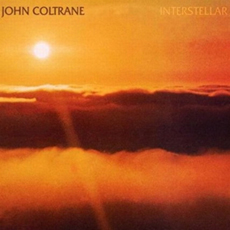
Perfect Sound Forever, an online music magazine has an article on John Coltrane's Interstellar Space. I didn't read it yet but thought i shared the link already. Happy reading.

Thursday, April 15, 2010

Jazz Musicians and their healthcare

The second annual San Francisco Jazz Fest a health care fundraiser will take place on April 23rd. read more about it at the HuffingtonPost.

Wednesday, April 14, 2010

Sunday, April 11, 2010

Interview with Sonny Rollins

Freep.com published an interview with Sonny Rollins which can be read here. Enjoy!

Saturday, April 3, 2010

Mike Zwerin R.I.P.

Just when you think it's been enough for this week, the news Mike Zwerin passed away reached us. Read more about it here.

Thursday, April 1, 2010

John Bunch R.I.P.

I received a message today in which is stated that John Bunch passed away on wednesday March 31st..No more details known yet

Monday, March 29, 2010

Herb Ellis R.I.P.

Herb Ellis passed away on the night of Saturday to Sunday, a message appeared on the West Coast-L stating :

“He died peacefully in his sleep. He put in a short appearance at last year's Sweet and Hot Festival in Los Angeles, in a wheelchair with a carer.
He'd had Alzheimers for a while. »

There’s a Facebook group dedicated to  Herb Ellis here.

ROIO of the week : Jeru Vol. 6

After a break of some weeks, here we go again. This time with the last in my serious of rare Gerry Mulligan recordings.


Here's the details:
CDR -) EAC -) FLAC

W 9006 JERU VOL. 6
CONCERT JAZZ BAND
Don Ferrara, Phil Sunkel, Conte Candoli (tp)
Bob Brookmeyer (v-tb) Wayne Andre, Alan Raph (tb)
Gene Quill (as,cl) Dick Meldonian, Jim Reider (ts)
Gerry Mulligan (bar,p,arr) Gene Allen (bar,b-cl)
Buddy Clark (b) Mel Lewis (d) Al Cohn (arr)
Newport J F JULY 1, 1960

1. Intro
2. BROADWAY
3. I WANT TO LIVE
4. OUT OF THIS WORLD
5. MANOIR DES MES REVES
6. 18 CARROTS FOR RABBIT
7. WALKIN' SHOES
8. SWEET AND SLOW
9. I'M GONNA GO FISHIN'
10. BLUEPORT
11. CLOSING
      
Newport, G.M.6et July 5, 1963
RB
12. THE ANTHILL

Bill Crow b, Bob Brookmeyer, vtb; Art Farmer flh, Jim Hall g
Dave Bailey ds, Gerry Mulligan bs

Sunday, March 28, 2010

New Glenn Gould recording discovered

A rare 1955 recording of Glenn Gould has shown up and is even downloadable here. The concert took place on 4 or 5 december 1955 in Victoria. Enjoy!

Saturday, March 27, 2010

Lee Konitz

My good friend Didier B. drew my attention to the fact that this evening France Musique will broadcast from 01.00 AM till 07.00 AM a special program on Lee Konitz. More info can be obtained here. Happy listening.

Tuesday, March 23, 2010

Bitches Brew 40th Anniversary Tribute


A very brief summary of the Bitches Brew panel at Austin's SXSW with amongst others : Ashley Kahn, Lenny White, Vince Wilburn can be read here.

Monday, March 22, 2010

Charlie Parker in the Guardian


Quite a long article on Charlie Parker appeared in the Guardian last sunday, it's still available here!

Sunday, March 21, 2010

Sonny Rollins : On Point 17.03.2010


Sonny Rollins was live interviewed for On Point last wednesday. You can read more about here. I recorded the interview and made it available as an MP3 (320kb) here.
It's over 45 minutes and with Sonny Rollins, Bob Blumenthal is as well interviewed and questioned about Newk.
Enjoy!

Tuesday, March 16, 2010

Behind the Brel: The Story of a Musical Genius


A 3 part series on the life and times of Jacques Brel will be broadcasted on BBC Radio 2 as of this evening 23.30 London time.

Here's the introduction to this evenings first part :

Marc Almond invites Radio 2 listeners to explore the music and unconventional life of one of France's most revered singer-songwriters - Jacques Brel.
Largely unknown in the English speaking world (mainly due to him singing in French), Jacques Brel is considered one of the great songwriters of the 20th Century, whose lyrical content is poetically introspective and delivered with an honesty few could deny.
Tacking subjects such as love, death and social issues, Brel's music has been translated by artists such as David Bowie, Scott Walker, Shirley Bassey, Joan Baez, Barbra Streisand, Ray Charles, Frank Sinatra, Nina Simone, Dusty Springfield, Petula Clark, Rod McKuen, Terry Jacks, Nirvana and Vera Lynn.
Brel songs, which became major hits in the English-speaking world, include Ne Me Quitte Pas (If You Go Away), Seasons in the Sun, Jacky and Amsterdam. And in this three part series, Marc Almond will investigate why some Brel songs translated well and others didn't.
In the 1950s French society was heavily influenced by the philosophy espoused in Jean-Paul Sarte's Existentialism and Humanism and Marc will examine how this had a direct impact on Brel's songwriting and unconventional lifestyle.
Dubbed "the eternal adolescent" we will hear how Brel lived alone in Paris, despite having a wife and three children in his home town of Brussels, in order to preserve his "artistic inspiration". A man incapable of living a "pipe and slippers" life-style, we'll discover how his sense of freedom was so strong he attempted to circumnavigate the globe on a sail boat after sensationally quitting singing whilst at the peak of his career.
Contributors include Rod McKuen, who made If You Go Away famous; his daughter France Brel; Seasons In The Sun singer Terry Jacks; the Irish singer Gavin Friday; the French-Irish singer Camille O'Sullivan; Momus (aka singer Nick Currie); opera singer Toby Spence; Peter Straker; translator Paul Buck; singer-songwriter Robb Johnson, who released an album celebrating the work of Brel on his own record label; actress Elly Stone; and Jean-Michel Boris from the Paris Olympia, where Brel performed his last concert.

News on the Miles Biopic

Got this link from one of the music lists i'm on. To me the most tricky senctence is this one :

"Once is the script is OK’d by the family, then we go into production.”

That might take a while ....

Monday, March 15, 2010

Famous Jazzclub Montmartre Re-opens in May

Jazzclub Café Montmartre in Copenhagen re-opens in May! Below is a google translation of a Swedish article.

http://sydsvenskan.se/danmark/article637052/Magisk-jazzscen-far-nytt-liv.html

March 11, 2010


Magical jazz scene get new life

34 years ago packed "It Hemmelige Big Band" down their instruments and one of the world's most legendary jazz clubs closed. Now open the Café Montmartre again.

by Claes Fürstenberg

Jazz Pianist Niels Lan Doky lives alternately in Paris and New York. But now he's moving back to Copenhagen. A year ago, he discovered that the barber school at Great Rain Gade would move. Niels Lan Doky called his good friend Rune Bech, saying that "now we have a chance." They contacted the landlord and convinced him to break off negotiations with another tenant. They made him happy because he was a jazz lover.

The premises were the years 1954-1976 Café Montmartre. On May 1, resurrected jazz club.

At Café Zeze across the street sits Rune Bech and is studying a plan together with interior designer Peter Bundsgaard.

- It should not become a museum. But it will be a mixture between modern and nostalgic, "says Rune Bech.

The long, narrow wooden tables will be reproduced as well as the ten plaster masks that adorned the walls.

- And the mood, "says Rune Bech.

How it was at Montmartre for greatness time in the sixties, the author Dan Truèll described in a poem.

He writes about the semi-darkness, the dense smoke haze, that all wore sunglasses and island shirts, that everyone wanted to dance but it was so crowded that it was not possible without it had to be content with that swing along the benches.

"Og uden Montmartre havde mange af os Levet / A meget less verden / 60'ernes in Copenhagen", the poem ends.

- That was it. The club was an equally large attraction and as well known abroad as Christiania is today and it was Copenhagen to feel better, "says Rune Bech.

And Montmartre was a major contributing factor to many of jazz's biggest names settled in Copenhagen for good. Ben Webster and Dexter Gordon were two of them.

The new club would also attract international names. Game program for the first three months are clear but Rune Bech would not release the names yet.

- We want to mix the big names with the greatest talents that are not yet so famous. And there is plenty of talent. Jazz is great interest among young musicians, "he says.

Rune Bech is IT entrepreneur and former journalist. He is 43 years and never got a chance to go to the original Montmartre at Great Rain Gade. On the other hand, he was a frequent guest at Montmartre in 1976-1995 stood at Nørregade (last years disco). The Swedish musicians Ulf Wakenius, Lars Danielsson and Lars Jansson, are among his favorites.

Pianist Jan Johansson played in the house band at Great Rain Gade 1959th In an interview he said:

- Montmartre is simply a unique and wonderful place to play on. The American musicians not only play better here, but also different, more shades, more daring, weak and strong at the same time.

- To see great artists in a small, intimate room can not compare with seeing them in a concert hall, "says Rune Bech.

The club is 104 square meters and will have room for one hundred guests. The 60s were paired dishes half chicken with fries (SEK 5.50) and baked mussels with lemon and bread (3 £).

For the new menu is Elvio milleri, owner of the Michelin restaurant Era Ora. When he heard about the plans, he said immediately that he wanted to be. Montmartre was a second home to him when he came to Copenhagen in the seventies. Michelinmat the cafeteria prices, it should be served.

Era Ora-owners do not anticipate making money on the new Montmartre and others do not either. The activity will be driven by volunteers and sponsors. Such as the jazz-loving detergent importer who has already donated scouring for the next five years.

Sunday, March 14, 2010

Trane, Dolphy and Anti-Jazz...

 
Howard Mandel wrote a lenghty article on the Coltrane - Dolphy collaboration called 'Anti-Jazz : The New Thing Revisited' and which can be read here.
Enjoy!

Saturday, March 13, 2010

The Pacific


HBO will start its new WWII series tomorrow night. A lot of stuff is showing up and fan groups are everywhere like for instance on facebook or here where they also have a forum.
I'm still looking for a HQ recording of the 'Making of ' episode which was broadcasted last february. If anyone here around has it please contact me.
Thanks in advance.

Friday, March 5, 2010

Don Ellis

THE EXOTIC RHYTHMS OF DON ELLIS
A DISSERTATION by SEAN P. FENLON
MAY 25, 2002

A 215 page analysis of Don Ellis can be fond here

Thursday, March 4, 2010

Sonny Rollins Named 2010 Edward MacDowell Medalist

The MacDowell Colony, the nation's leading artist residency program, will present its 51st Edward MacDowell Medal to jazz composer and tenor saxophonist Sonny Rollins on Sunday, August 15. The MacDowell Medal has been awarded annually since 1960 to an individual who has made an outstanding contribution to his/her field, and this year marks the first time the Colony has recognized the field of jazz. Rollins joins an impressive list of past recipients, including Leonard Bernstein, Alice Munro, I.M. Pei, Merce Cunningham, and Georgia O'Keeffe.

Beginning at 12:15 pm, the award ceremony will take place on The MacDowell Colony grounds, which will be open to the public for the festivities and celebration. Robert MacNeil, chairman of The MacDowell Colony, will award the Medal, along with Cheryl Young, executive director. MacDowell Fellow and preeminent jazz writer and critic Gary Giddins, this year's presentation speaker, will introduce Rollins and describe his life and work to the audience.

"I'm proud and pleased to be selected to receive this very special prize," Rollins said. "Edward MacDowell's spirit engaged me many years ago when, as a child, I was inspired by his composition 'To a Wild Rose.' Later, I had the opportunity to make it a part of my repertoire, performing it on many occasions and eventually recording it. Somehow I feel I'm getting to meet him again."

In naming Rollins the 2010 Medalist, Giddins, also chairman of this year's Medalist Selection Committee, said, "Much as The MacDowell Colony represents to countless artists a matchless paradise for inspired, uninterrupted creativity, this year's Medalist represents the zenith of his art. Perhaps more than any other artist since World War II, Sonny Rollins has personified the fearless adventure, soul, wit, stubborn individuality, and relentless originality that is jazz at its finest. From the time he began recording, at 19, he was recognized as a major talent; his innovative approach to the tenor saxophone was endlessly copied, and his original compositions frequently adapted. But in jazz, composer and performer are often one and the same, and perhaps his key achievement has been the forging of an improvisational method that has given the idea of theme-and-variation
s a renewed vitality. His singular music is at once reassuring in its fortitude and daring in its detou rs. Incapable of faking emotion or settling for rote answers to the challenges of creating music in the moment, he keeps us ever-alert to the power of the present."
 

Saturday, February 20, 2010

Jamil Nasser R.I.P.

I got this sad news in my mailbox today :

Renowned bassist and educator JAMIL NASSER died Saturday afternoon, February 13, 2010, at Englewood Hospital, after suffering a stroke and massive cardiac arrest. He leaves behind his beloved wife of 30 years, Barbara (Baano) Nasser, their son Najee, and sons Umar, Muneer and Zaid, and daughter Aliyah, from his first marriage, to Karimah.

Janaza services were held on Monday, February 15, at the Dar-ul Islah Mosque in Teaneck, New Jersey, followed by burial at the Islamic Cemetery at the New Jersey State Memorial Park. All of Jamil's and Baano's closest relatives attended both services, including his son Umar, who flew in from Saudia Ariabia where he lives and works. His mother, Mrs Claudie Joyner, who is 102, was not able to attend. However, Jamil and Baano spent some time during the summer visiting her.

Cards and expressions of sympathy may be sent to:
Barbara (or Baano, as Jamil used to say) Nasser
2105 Windsor Park Ct
Englewood, NJ, 07631


PLEASE HOLD THIS DATE: The Committee for Jamil's "Celebration of His Life and Gifts" is looking at Sunday, March 21, 7:30 p.m., at Saint Peter's Church, 610 Lexington Ave, NYC 10022. If the Committee obtains that date, more information will be sent. Or we will be loooking for another date.

love, cob
One of Jamil's "best friends" and older "sister"

Jamil Nasser's 77th Birthday Party Bash (reprinted from AllAboutJazz)
:
The Great Bassist Jamil Nasser was recently given a party to honor his 77th Birthday. The event was [produced by his wife Barbara (Baano) Nasser and friend, Cobi Narita, and] held at Cobi's Place on June 21, 2009. In attendance was Ahmad Jamal, Monty Alexander, George Coleman, Lou Donaldson, Richard Wyands, Paul West, Harold Mabern (and many other musicians he had worked with). It was a great tribute to an important musician and educator of our time.

JAMIL NASSER - born June 21. 1932 - died February 13, 2010
Jamil Nasser (George Joyner) was born in Memphis, Tennessee, where he began his musical career in 1948 as a tuba player in the Booker T Washington High School Band. Shortly thereafter, he was encouraged by his boyhood friend and neighbor, the musical genius Phineas Newborn Jr., to play the bass violin. He began playing the bass in 1949, and was selected to play bass with the school dance band after an impromptu audition. The Director was Phineas Newborn Jr. Jamil and Phineas recorded in Memphis in 1953 for Peacock Records.

After high school, with three all-expense musical scholarships to choose from, he chose Arkansas A.M. & N. College in Pine Bluff, Arkansas, where he organized and led the college band, the State Collegians. They went on to win the Pittsburgh Courier Poll for the "Best College Dance Band of 1950-1951."

After college, Jamil was drafted into the Army and was bassist and arranger for the 3rd Army Special Service Package Shows. Other members included Wynton Kelly, Duke Pearson and Leonard Nimoy (Mr. Spock from Star Trek). During that time, he was commissioned by General Bolling (Commander-In-Chief of the 3rd Army) to orchestrate the overture for the 3rd Army extravaganza, "Southland Panorama," using the 100-man concert orchestra plus the 19-piece dance band.

Upon being released in 1955, Jamil joined BB King's band as bassist and arranger, and played the Electric Bass (a newly created instrument at that time). Phineas asked Jamil to join him in New York for his debut at the Basin Street East in 1956. They were well received by the musicians and the Jazz fans in New York. The trio was invited on the Birdland tour in 1957. Jamil was featured with the Phineas Newborn Jr. Quartet until 1958.

Thereafter, he was featured bassist with all-star jazz groups in both recording and personal appearances with such notables as Lou Donaldson, Donald Byrd, John Coltrane, Randy Weston, Red Garland, Gene Ammons, Herbie Mann, Al Haig, Lionel Hampton, Anita O'Day, Chuck Wayne and "Philly" Joe Jones, to name a few.

Forming a quartet in 1958 with the late legendary Oscar Dennard (pianist), Idrees Sulieman (trumpet) and Buster Smith (drums), they performed throughout Western and Eastern Europe, North Africa, and the Middle East for three years. After returning to America in 1962, Jamil was musical director and leader of the trio at Chuck's Composite, an East Side night club that was the phenomenon of the early sixties.

Jamil joined the Ahmad Jamal Trio in 1964, along with Frank Gant on drums, an association that lasted for eleven years. During this same period Jamil was vice president of Ahmad Jamal Productions Corporation, Hema Music Incorporated, and Jamal Publishing Corporation. He was President of The King Series, an organization that specialized in special artistic packaging of all-star groups assembled with emphasis on musical compatibillity and historical importance, such as the importent packaging of the quartet which featured Red Garland, Lou Donaldson, Jimmy Cobb and Jamil, which toured Japan to sold-out houses in each city.

As producer of the jazz portion of the first "Memphis In May Festival" in 1977, Jamil assembled expatriate Memphis jazz artists and performed with them to more than 13,000 people on the famous Beale Street. Artists included were Phineas Newborn Jr., George Coleman, Hank Crawford, the late Sonny Criss, Frank Strozier, Harold Mabern and Marvin Stamm, to name but a few.

He served as musical director and bassist for actress/jazz singer Cybill Shepherd's east coast engagements.

Jamil produced and directed the first enormously successful 3-day Westchester Jazz Festival for the Presbyterian Jazz Society in Mount Vernon, N.Y.

He was a Vice Presdent of the Jazz Foundation of American 1990-1995.

He was the CEO and founder of Global International Art, Inc.. (GIA), which had a board consisting of artists and business people whose primary interest was to preserve the classical Jazz Art that is based on the total Black experience of swing-soul and beauty.

As an educator, he was director of jazz workshops at State University of New York st Stony Brook.

For many years, he was music director of the Universal Jazz Coalition, Inc./ Jazz Center of New York. producing special concerts and different workshops for instrumentalists and vocalists. Jamil and his trio, Harold Maben on piano and Frank Gant on drums, conducted well-attended weekly free jam sessions, which were important due to the construcitve critiques offered by the trio.

Among his most notable concerts were the intensely beautiful presentation of his Bassoon Choir, the fulfillment of a long-time dream, under a grant from the National Endowment for the Arts; his concert honoring one of his best friends, Major Holley, titled Bass Ball, his tribute concert for Red Garland was one of the most musically-satisfying concerts of the year; and he, along with Max Roach and Cobi Narita, spearheaded the fundraising concert for his best friend and mentor, Papa Jo Jones, at the Village Gate, raising $15,000 in cash which he presented to Papa Jo.

Jamil's other mentor and great friend was Lester Young; Jamil used to say that Papa Jo and Prez had their own special language. They watched over Jamil and taught him "the tricks of the trade". Jamil made the arranements to get Prez out of France and back to the U.S., during his final illness.

For more than a decade, he was George Coleman's "bassist of choice", performing in hundreds of supremely successful concerts, where his steady, strong, yet sensitive, lyrical bass lifted the group to new heights with each performance. One of the finest tenors of our time, George never sounded better nor appeared to enjoy the music more than when he played with Jamil.

He was also bassist of choice with Randy Weston for many years; his first performance with Randy (as George Joyner; he legally became Jamil Nasser later in the same year) was at the 1958 Newport Jazz Festival. One of the highlights of his working with Randy was performing with the Boston Pops Orchestra. With Randy, he recorded three albums in Paris over one weekend:
Tribute to Duke Ellington
Tribute to Thelonious Monk
Music of Randy Weston

Nasser's great diversity and sensitivity on the bass made him in great demand. He is on hundreds of albums. A few of them, among many others, are:

Outertimeinnerspace Ahmad Jamal-Impulse AS-9226
Freeflight Ahmad Jamal-Impulse AS-9217
Eddie Heyward Now Eddie Heyward-Lyn Records EH-1000
Fine and Dandy Lou Donaldson, Red Garland, Jimmy
Cobb, Jamil Nasser LOB LOC-1022
Expressly Ellington Al Haig-Jamil Nasser Combo Spotlite SPJ LP20
New York Panorama George Coleman Quartet Theresa Records TR120
Portraits of Thelonious Monk Randy Weston 3 Album set Polydor France 281-LCO383
Portraits of Duke Ellington Randy Weston Polydor France 281-LCO383
Self Portraits Randy Weston Randy Weston Polydor France 281-LCO383

MOVIES
The Preacher's Wife Featuring Whitney Houston, Denzel
Washington, Lionel Richie.
Also with George Coleman, tenor; Roy Haynes, drums; Ted Dunbar, guitar

Friday, February 19, 2010

Art Van Damme R.I.P.

Art Van Damme, reknown jazz accordionist passed away at the age of 89. You can read more of his passing away here and about his career in general here.

Tuesday, February 16, 2010

OOP : Albert Ayler Lörrach/Paris 1966

This concert was at the time issued by HatHut but now Out Of Print. I got a copy from the local public library...

Albert Ayler 
Lörrach/Paris 1966
HAT ART CD 6039

Albert Ayler   (tenor saxophone)
Donald Ayler   (trumpet)
Michel Sampson   (violin)
Bill Folwell   (bass)
Beaver Harris   (drums)

1. Bells (13.18)
2. Jesus (6.51), 
3. Our Prayer (6.06)
4. Spirits (3.12)
5. Holy Ghost (11.01)
6. Ghost (7.38)
7. Holy Family (10:49)
8. Ghost II (4.46)

Tracks 1 to 5:
November 7, 1966
Lorrach, Germany
Tracks 6 to 8:
November 13, 1966


CD -) EAC -) FLAC
scan of cover art and booklet included

Sunday, February 14, 2010

Jake Hanna R.I.P.

On february 12th drummer Jake Hanna passed away. A very nice tribute to Mr. Hanna can be found here including different videoclips.
R.I..P. Jake Hanna

Saturday, February 13, 2010

Essay on George Orwell


George Wheatcroft wrote an essay on George Orwell for the NYT which you can read here.
Enjoy!

Friday, February 12, 2010

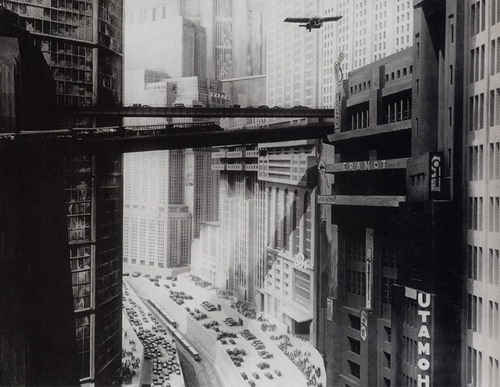
Metropolis


ARTE will broadcast this evening (20.50 PM Paris Time) live from the Berlin Film Festival the newly restored edition of Metropolis by Fritz Lang.For this newly restored version 27 minutes of unissued film were used coming from a collector in South America.
The film will be shown in avant premiere accompanied by live music brought by Rundfunk Sinfonieorchester Berlin.

Afterwards ARTE will broadcast a documentary on the restauration of Metropolis, the first film registered by UNESCO.

Sunday, February 7, 2010

Roger Guerin RIP

I heard this evening at french television that trumpetplayer Roger Guerin (° 09th January 1926) passed away on saturday February 06th.
Apparently he fell into a small into a small river in front of his house and drowned. Guerin began playing professionally in Paris after the liberation with amongst others James Moody, André Hodeir, Hubert Fol, Fats Sadi, Don Byas, Kenny Clark, Lucky Thompson, Blossom Dearie,...
He was also part of the Double Six a group with whom he frequently played and was present at the Paris Jazz Festival in 1949 with Bird!

Later on he played with Martial Solal and Eddy Louiss.
RIP Roger.

Thursday, February 4, 2010

Robin D.G. Kelley Interview

Author Robin D.G. Kelley is featured in a long interview about his recent biography on Thelonious Monk. Enjoy!

Wednesday, January 27, 2010

Book News (2) : Michael Connelly

Coming Next From Michael Connelly - THE REVERSAL Michael is currently busy writing his next novel, THE REVERSAL. Here is a brief plot summary: Longtime defense attorney Mickey Haller is recruited to change sides and prosecute the high-profile retrial of a brutal child murder. After 24 years in prison, convicted killer Jason Jessup has been exonerated by new DNA evidence. Haller is convinced Jessup is guilty, and he takes the case on the condition that he gets to choose his investigator, LAPD Detective Harry Bosch. Together, Bosch and Haller set off on a case fraught with political and personal danger. Opposing them is Jessup, now out on bail, a defense attorney who excels at manipulating the media, and a runaway eyewitness reluctant to testify after so many years. With the odds and the evidence against them, Bosch and Haller must nail a sadistic killer once and for all. If Bosch is sure of anything, it is that Jason Jessup plans to kill again.

THE REVERSAL will be released in the USA, Canada, the UK, Ireland, Australia, and New Zealand later this year. We'll give you more specific information, including cover art, the release dates, and an excerpt, as soon as we possibly can. Stay tuned!

Book News (1) : James Ellroy

Goods news for you Ellroy die-hards. After 'The Hilliker Curse' which appears this year we only will have to wait for two years before the first of a new LA4tet will be pubished under the title 'Perfidia'. You can read more about it here.

Tuesday, January 26, 2010

Ed Thigpen R.I.P. (2)

It seems the news is coming through, at last the NYT published it's obituary...

Sunday, January 24, 2010

NPR offers Lee Konitz

Live At The Village Vanguard
'Case you hadn't noticed, alto saxophonist Lee Konitz is still making music as rich and crookedly beautiful as ever -- even at age 82. He put together an unconventional trio of piano and drums to hit at the Village Vanguard this week, and WBGO was there to record and live-stream the early set on Wednesday night. There's a free MP3 and a photo gallery just waiting for your mouse clicks. Elsewhere: Django Reinhardt at 100, Cedar Walton on Piano Jazz and a Benny Golson birthday bash. Happy listening.

—Patrick Jarenwattananon
An offer we can't refuse... 

Wednesday, January 20, 2010

Robert P. Parker R.I.P.

Robert B. Parker, crime writer by excellence passed away monday. Read the NYT obituary for all details.

Tuesday, January 19, 2010

Monday, January 18, 2010

L.F. Céline in the NYRB


Uncovering Céline is the title of a 7 page article/review of several novels by Céline who are translated in English.Enjoy the read!


Saturday, January 16, 2010

Ed Thigpen R.I.P.

Ed Thigpen passed away on January 13 th. No more details available yet, see here.

Wednesday, January 13, 2010

James Ellroy : a Demon Dog Overdose

Since my good friend Didier W. directed my attention on James Ellroy's tour in France (part of bigger promotion tour in western Europe) i'm having an overdose of Ellroy. It's not dangerous just addictive. I found a lot of interesting sites with articles, interviews and readings from Blood's A Rover.
Here are some : NPR, NYRB, Rolling Stone, artandliterature, kqed, ThePhlog, zocalopublicsquare.
He was interviewed at France Inter monday 11th of January and should be available on their website, i haven't found the link yet...
Enjoy in the mean time the stuff you goto to read and listen at.

Monday, January 11, 2010

Eric Rohmer R.I.P.

Eric Rohmer passed away at 89 years old. Obituaries are written everywhere : Le Monde, Libération and the NYT.

Saturday, January 9, 2010

Jay Jay Johnson : Amsterdam 1957


A recording of Jay Jay Johnsons quintet at the Amsterdam Concertgebouw is being released by 'Muziek Centrum Nederland'. Jay Jay Johnsons quintet featured besides the leader Bobby Jaspar, Tommy Flanagan, Wilbur Little and Elvin Jones. The booklet contains unique pictures from the concert which were taken by dutch photographer Ed van der Elsken.

I just ordered my copy ;-)

Delen

Friday, January 8, 2010

Thelonious Monk article


David Jaffe wrote a review/article on the new biography on Thelonious Monk written by Robin D.G. Kelley for the Nation. Hm i really will have to buy this one..

Enjoy the read and have a nice weekend!

P.S. I googled 'Monk' for finding a picture of Thelonious Monk and had as results pictures of a certain Adrian Monk and a certain Sophie Monk.

Thursday, January 7, 2010

Albert Camus update

Since my previous post on Albert Camus other french newspapers also published articles.

Le Figaro has an interview with the daughter of Albert Camus and a portrait.

Le Monde has a portrait written by Bernard Henri-Lévy.

Enjoy!

Wednesday, January 6, 2010

ROIO Of The Week : Jeru Vol. 5

Here's the next one in our Gerry Mulligan series of ROIO's. I'll try to publish a complete listing of the 6 volume series soon... Enjoy!


W 9005 " JERU " VOL. 5
CONCERT JAZZ BAND LIVE
Don Ferrara, Conte Candoli, Nick Travis (tp),
Bob Brookmeyer (vtb), Willie Dennis (tb),
Alan Raph (b-tb), Gene Quill (cl, as),
Bob Donovan (as), Jimmy Reider, Zoot Sims (ts),
Gene Allen (bars, b-cl), Gerry Mulligan (bars, p),
Buddy Clark (b), Mel Lewis (dm)

GOTHENBURG NOVEMBER 2, 1960
1.UTTER CHAOS
2. I WANT TO LIVE
3 - 5. BLACK NIGHTGOWN &
GO HOME
6.SWEET AND SLOW
7. MY FUNNY VALENTINE
8. I'M GONNA GO FISHIN'

COPENHAGEN, OCTOBER 31, 1960
9. UTTER CHAOS
10. BLACK NIGHT GOWN
11. 18 CARROTS FOR RABBIT
12. APPLE CORE
13. COME RAIN OR COME SHINE
14. I'M GONNA GO FISHIN'

Monday, January 4, 2010

Albert Camus


Today it's 50 year ago that Albert Camus passed away due to an motor car accident. The french newspaper Libération has quite a long and apparently very interesting article here.

French public radio France Culture spends the whole week attention to Camus. An overview of all programs can be found here.
I hope they make some podcasts available since it's to much to listen and record at once during working hours.

R.I.P. Tibet

Tibet, the author of the comic series 'Rik Ringers / Ric Hochet" and Chick Bill passed away in the night of saturday on sunday. You can read a short obituary here.